




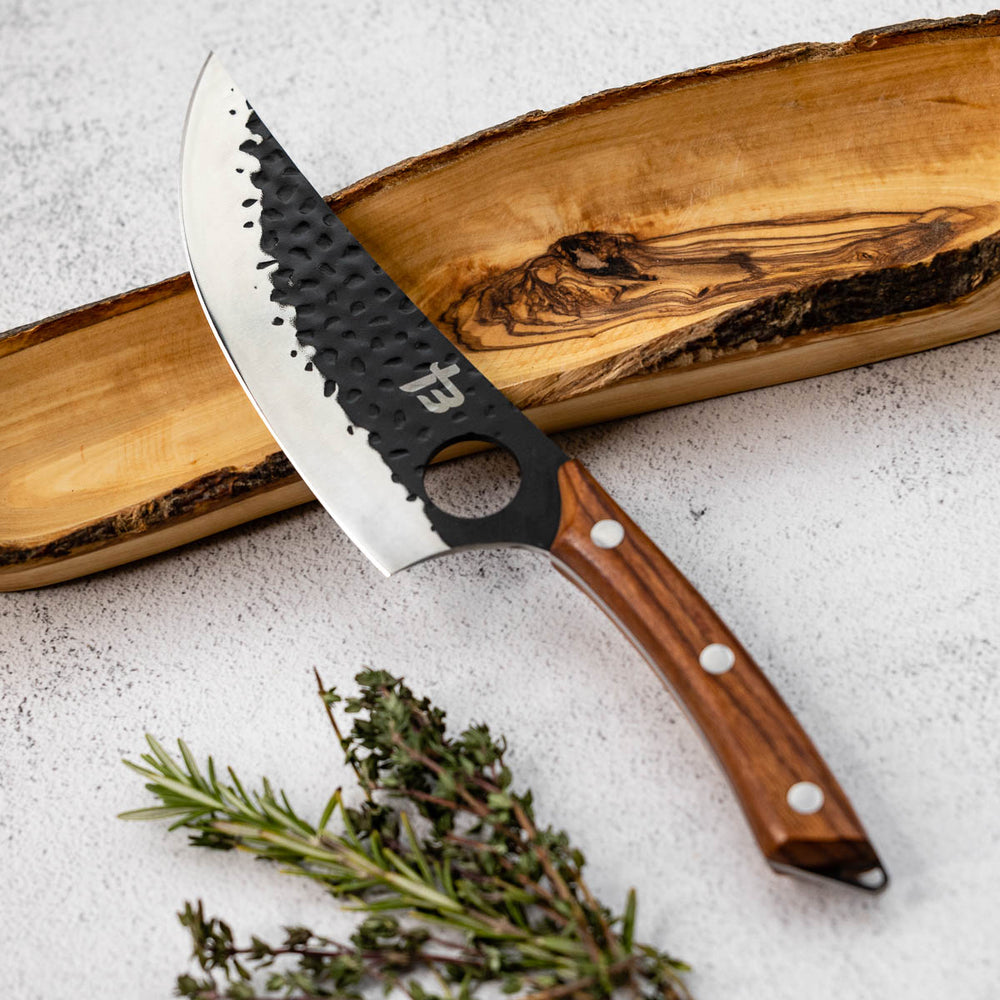

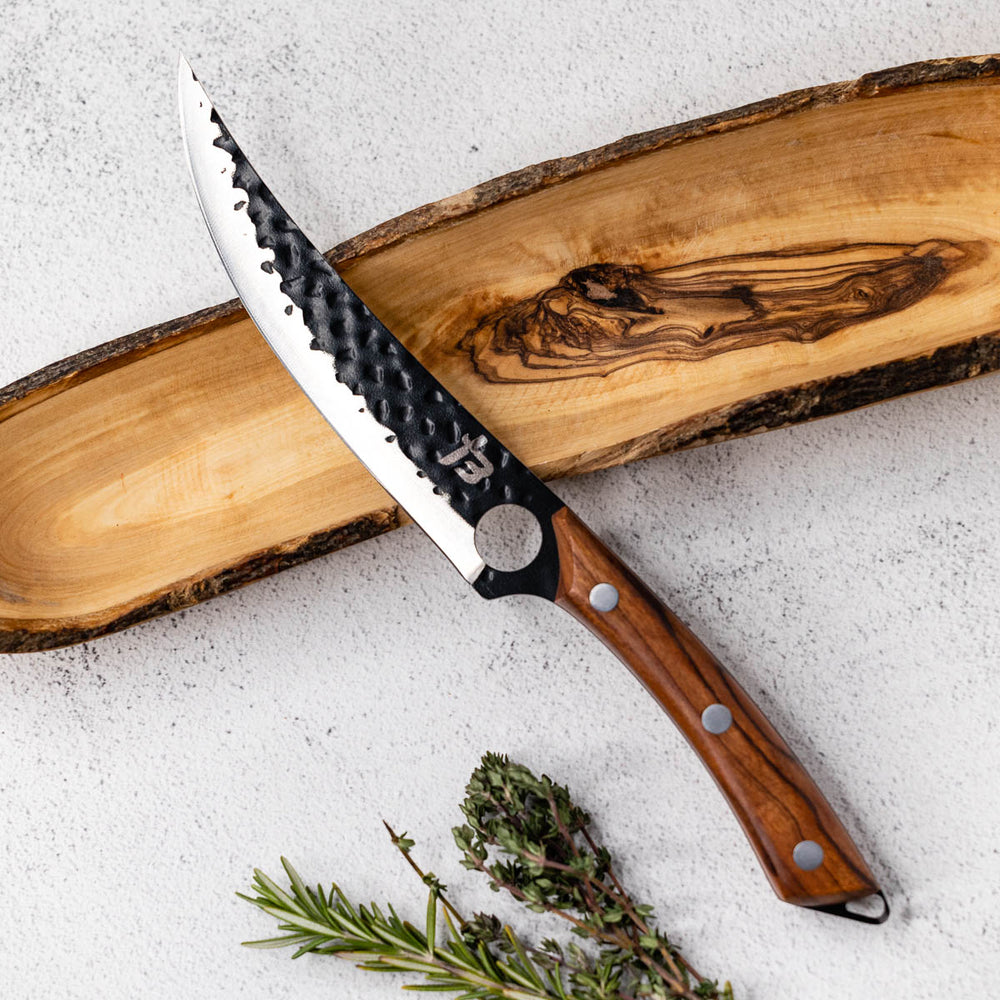

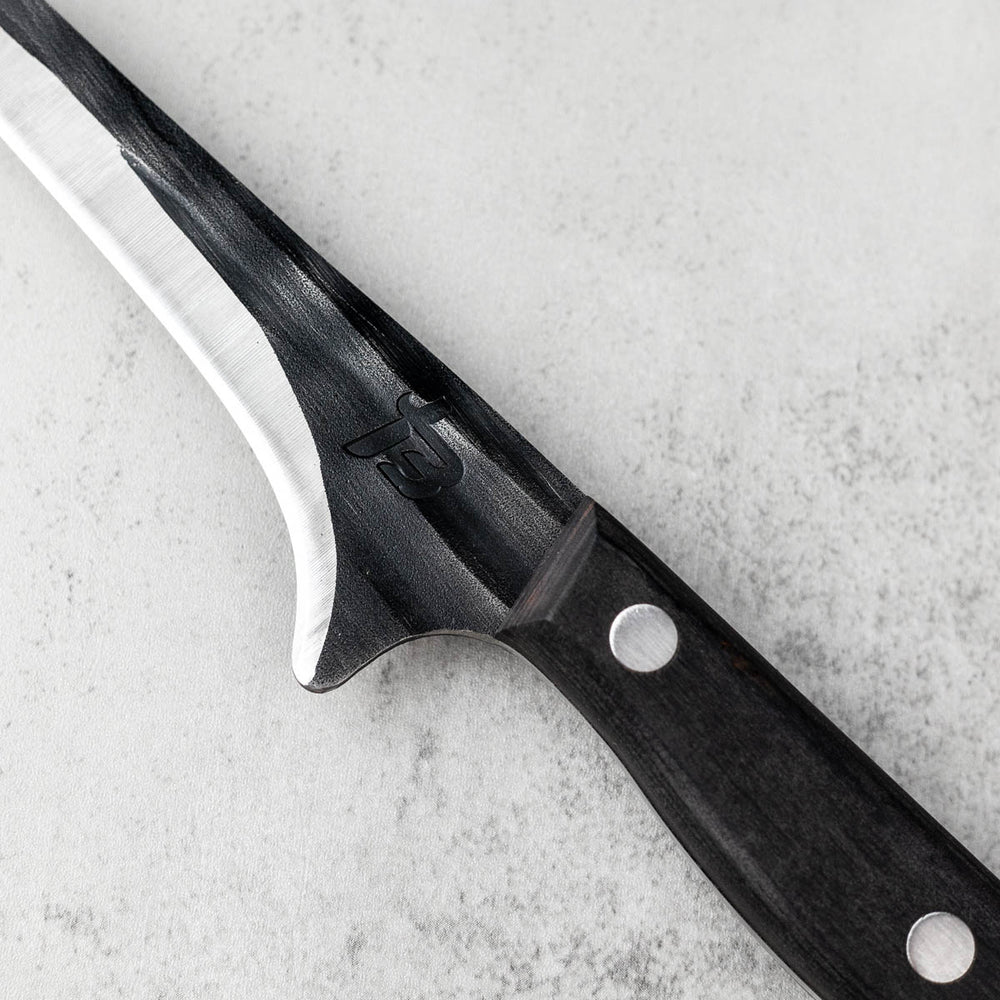

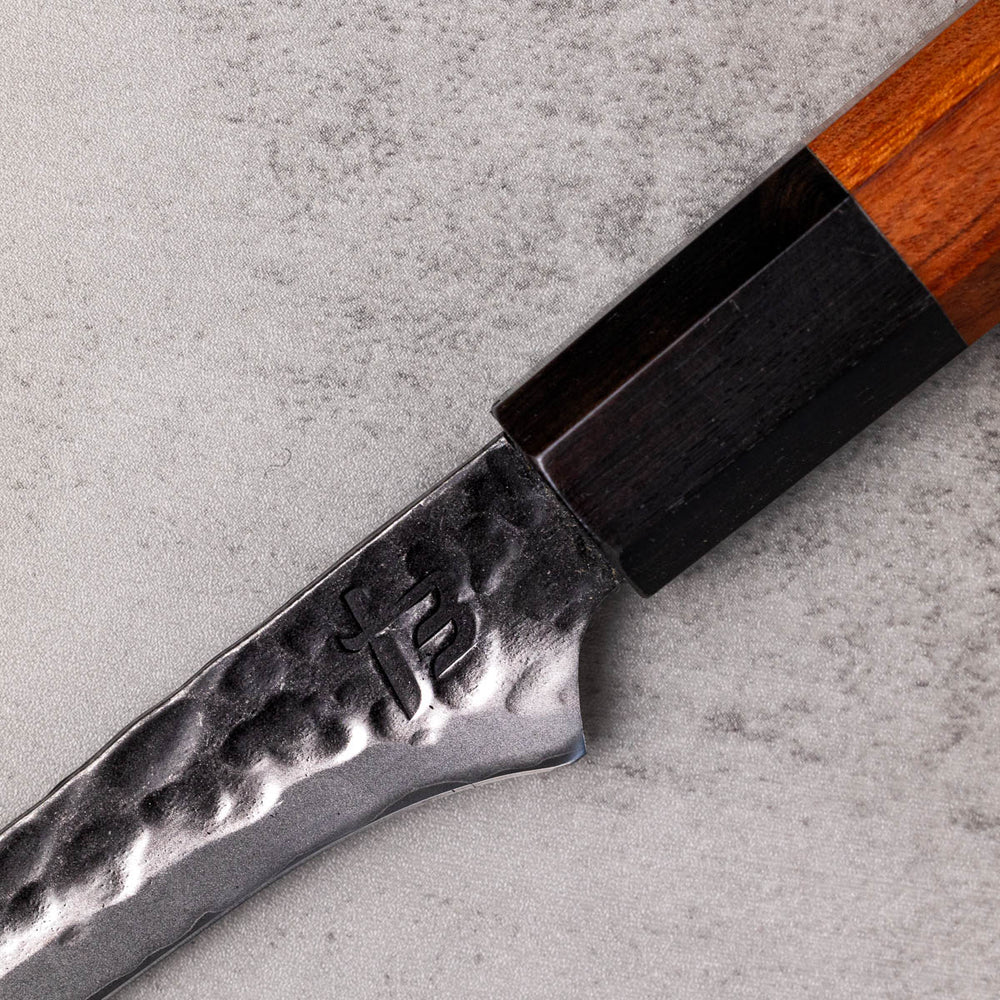

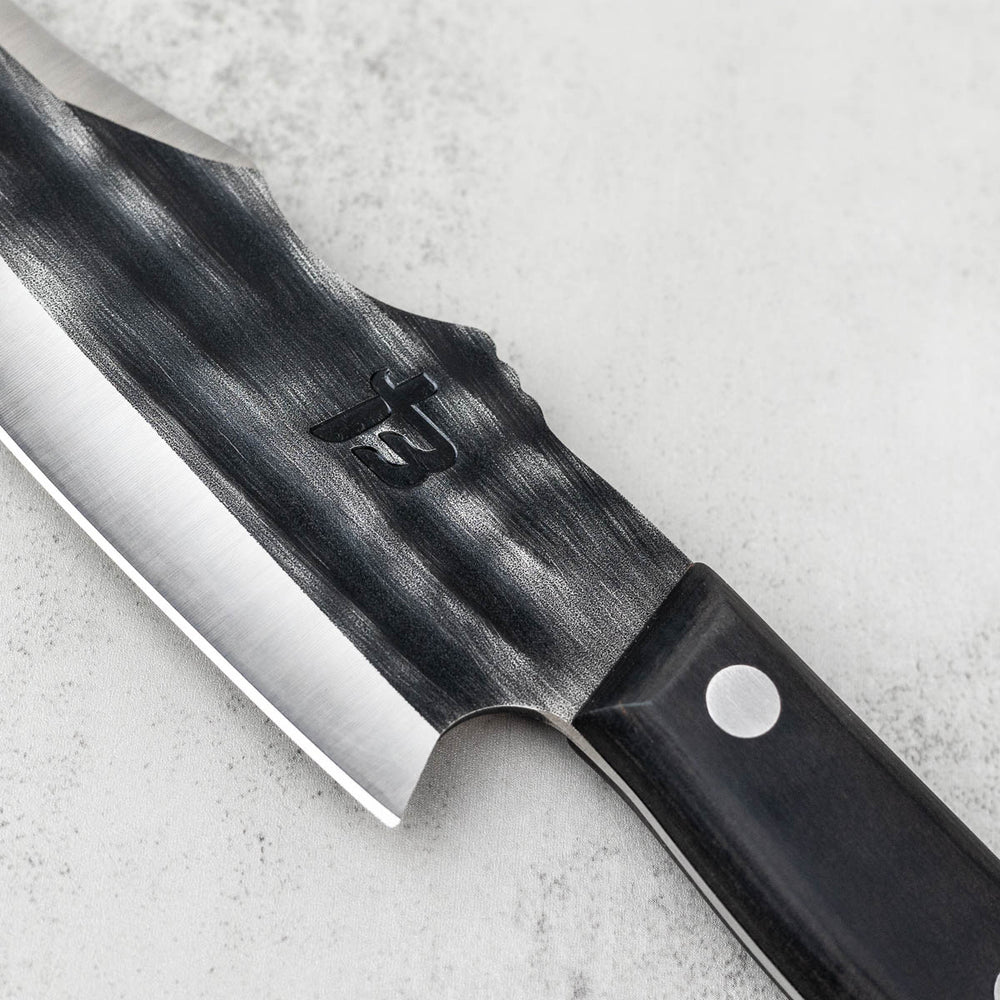
Boning & Fillet Knives
Boning and fillet knives are specialized blades built for working with meat and fish. Both are narrow and designed for precision, with a flexibility that lets the blade follow bones, joints, and skin closely to reduce waste. A boning knife is built primarily for separating meat from bone, while a fillet knife is built for cleanly filleting and skinning fish. Our boning and fillet knives are hand-finished and built for cooks who want more control and less waste when preparing protein.
Why a dedicated boning or fillet knife matters
Breaking down meat and fish is some of the most precise work in the kitchen, and a general-purpose blade is poorly suited to it. A chef knife is too wide and too rigid to navigate around bones or slip cleanly between flesh and skin, which leads to wasted product and slower, more frustrating work.
Boning and fillet knives are designed specifically for this. Their narrow profile lets the blade work into tight spaces around bones and joints, and their flexibility allows the edge to follow the natural contours of the meat or fish rather than cutting straight through it. The result is cleaner separation, less waste, and far more control. For anyone who breaks down whole chickens, trims larger cuts of meat, or fillets fresh fish, the right specialized knife makes the job dramatically easier.
How to choose between a boning knife and a fillet knife
The main decision is which knife matches the work you do most, and serious cooks often keep both.
-
Choose a boning knife if you primarily break down meat and poultry. Boning knives are built for separating flesh from bone, trimming, and removing joints, with a blade designed to work around the structure of a cut.
-
Choose a fillet knife if you primarily work with fish. Fillet knives are typically thinner and more flexible, designed to glide along the backbone and between flesh and skin for clean, intact fillets.
-
Consider both if you regularly prepare a range of meat and seafood. The two knives are designed for different structures and complement each other in a well-equipped kitchen.
These knives are specialists. They pair naturally with a chef knife, which handles the everyday slicing, dicing, and chopping work that a narrow specialty blade is not built for.
What makes ours different
Our boning and fillet knives are built around precision and control. On a narrow, flexible blade, how the knife handles is everything, so each of ours is shaped to feel responsive and accurate as it works around bone and skin. The blade geometry and edge are finished for clean, controlled cuts on demanding protein work where a wider knife would feel clumsy.
You also get a premium knife without the markup. Because we ship direct to consumer rather than through retailers and middlemen, you are paying for the knife itself, not several layers of distribution. Every knife is hand-finished, carries a lifetime warranty, and ships quickly from our US and Canadian warehouses to your door as a local North American brand.
Caring for your boning or fillet knife
A quality specialty knife will last for many years with simple care.
-
Hand wash only. Wash the blade by hand with warm water and mild soap, then dry it immediately. Avoid the dishwasher, where heat, moisture, and detergent can damage both the blade and the handle.
-
Store it safely. Keep the knife in a knife block, on a magnetic strip, or in a blade guard rather than loose in a drawer, which dulls the edge and risks chipping.
-
Oil as needed. Wipe the handle and blade with a small amount of food-safe oil occasionally to keep them conditioned, especially in dry environments.
Because these knives rely on a keen, precise edge to do their job well, regular honing keeps the blade performing, with occasional sharpening as the edge naturally wears.
Frequently Asked Questions
What is the difference between a boning knife and a fillet knife? A boning knife is built mainly for separating meat from bone and trimming cuts of meat and poultry. A fillet knife is typically thinner and more flexible, designed specifically for filleting and skinning fish. Many cooks who prepare both meat and seafood keep one of each.
What is a boning knife used for? A boning knife is used to separate flesh from bone, remove joints, and trim cuts of meat and poultry. Its narrow blade works into tight spaces around the bone structure, reducing waste and giving you cleaner results.
What is a fillet knife used for? A fillet knife is used to fillet and skin fish. Its thin, flexible blade follows the backbone and slips cleanly between flesh and skin, producing intact fillets with minimal waste.
Can I use a boning knife to fillet fish, or a fillet knife for meat? You can, but each performs best at its intended task. A fillet knife's thin flexibility is ideal for fish, while a boning knife offers more control around meat and bone. If you regularly prepare both, having the right knife for each is worthwhile.
Can a boning or fillet knife go in the dishwasher? No. Dishwasher heat, moisture, and harsh detergent can damage the blade and handle over time. Always hand wash and dry these knives to keep them performing and looking their best.