








Bread Knives
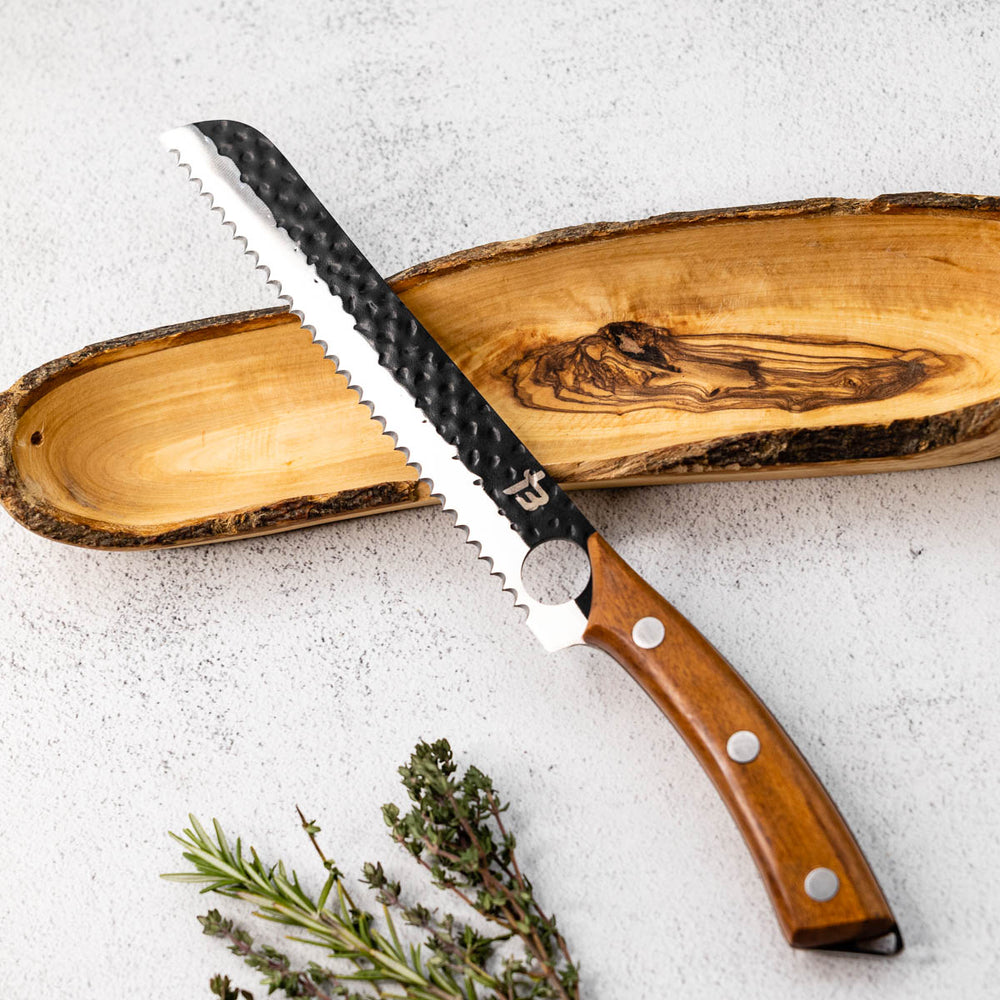
A bread knife is a long, serrated blade designed to slice cleanly through baked goods without crushing them. The serrated edge grips and saws through hard crusts while protecting the soft interior beneath, making it one of the most useful specialized knives in any kitchen. Our bread knives are hand-finished and built to deliver clean, even slices through everything from crusty sourdough to delicate cakes.
Why a dedicated bread knife matters
Bread has a structure unlike most foods you cut: a firm, often hard exterior surrounding a soft, airy interior. A straight-edged knife, including a chef knife, tends to slip on tough crusts and compress soft loaves, leaving you with squashed, uneven slices.
A serrated bread knife solves this. The pointed serrations bite into hard surfaces and do the cutting, so you can slice using a gentle sawing motion with very little downward pressure. The result is clean slices that hold their shape, whether you are cutting a fresh baguette or a soft sandwich loaf. A bread knife also handles other foods that give straight blades trouble, including tomatoes, citrus, melons, and layer cakes.
How to choose your bread knife
The main considerations when choosing a bread knife are blade length and how you intend to use it.
-
Length: Longer blades let you slice through a full loaf in a single stroke, which produces more even slices. Most home bakers are well served by a blade long enough to clear the width of a standard loaf.
-
Serration style: Pointed serrations excel at hard crusts, while wavy serrations can offer a smoother cut on softer items. Consider what you cut most often.
-
Use case: If you mostly slice soft sandwich bread, comfort and control matter most. If you bake crusty artisan loaves, prioritize a blade with aggressive serrations and enough length.
If a bread knife will be your first specialized knife, it pairs naturally with a good all-purpose chef knife to cover the majority of everyday kitchen tasks.
What makes ours different
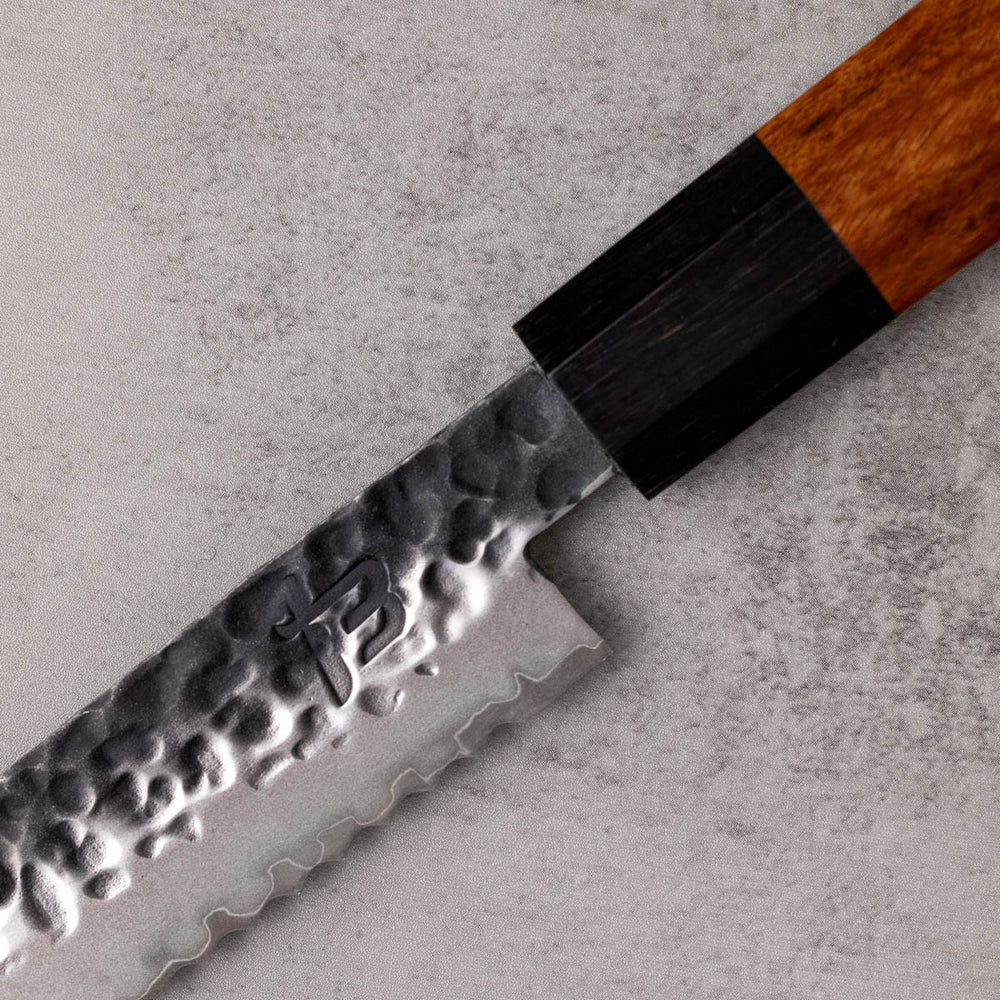
Our bread knives are built around the blade. Each one is shaped with serrations designed to stay sharp through years of regular use and a blade length suited to slicing full loaves with control. The balance and edge are tuned for the long sawing motion a bread knife relies on, so cutting feels smooth rather than forced.
Just as importantly, you get a premium knife without the markup. Because we ship direct to consumer rather than through retailers and middlemen, you are paying for the knife itself, not several layers of distribution. Every knife is hand-finished, carries a lifetime warranty, and ships quickly from our US and Canadian warehouses to your door as a local North American brand.
Caring for your bread knife
A quality bread knife will last for decades with simple care.
-
Hand wash only. Wash the blade by hand with warm water and mild soap, then dry it immediately. Avoid the dishwasher, where heat, moisture, and detergent can damage both the blade and the handle.
-
Store it safely. Keep the knife in a knife block, on a magnetic strip, or in a blade guard rather than loose in a drawer, which dulls the edge and risks chipping the serrations.
-
Oil as needed. Wipe the handle and blade with a small amount of food-safe oil occasionally to keep them conditioned, especially in dry environments.
Serrated edges hold their sharpness far longer than straight edges, so a bread knife needs sharpening only rarely. When the time comes, each serration is honed individually with a tapered sharpening rod.
Frequently Asked Questions
Can I use a bread knife for things other than bread? Yes. The serrated edge works well on any food with a tough exterior and soft interior, including tomatoes, citrus, melons, and layer cakes. Many cooks reach for their bread knife far more often than just at breakfast.
Why shouldn't I just use my chef knife for bread? A chef knife has a straight edge, which tends to slip on hard crusts and crush soft loaves. A serrated bread knife grips the surface and cuts cleanly with minimal pressure, giving you even slices that keep their shape.
How do I keep a bread knife sharp? Serrated edges stay sharp much longer than straight edges, so frequent sharpening is not needed. Hand washing, drying, and proper storage will preserve the edge. When sharpening is eventually required, each serration is honed individually with a tapered rod rather than a standard whetstone.
Is a longer bread knife better? A longer blade lets you slice through an entire loaf in one stroke, which generally produces cleaner, more even slices. For most home kitchens, a blade long enough to clear a standard loaf is ideal.
Can a bread knife go in the dishwasher? No. Dishwasher heat, moisture, and harsh detergent can damage the blade and handle over time. Always hand wash and dry your bread knife to keep it performing and looking its best.