










Cleavers
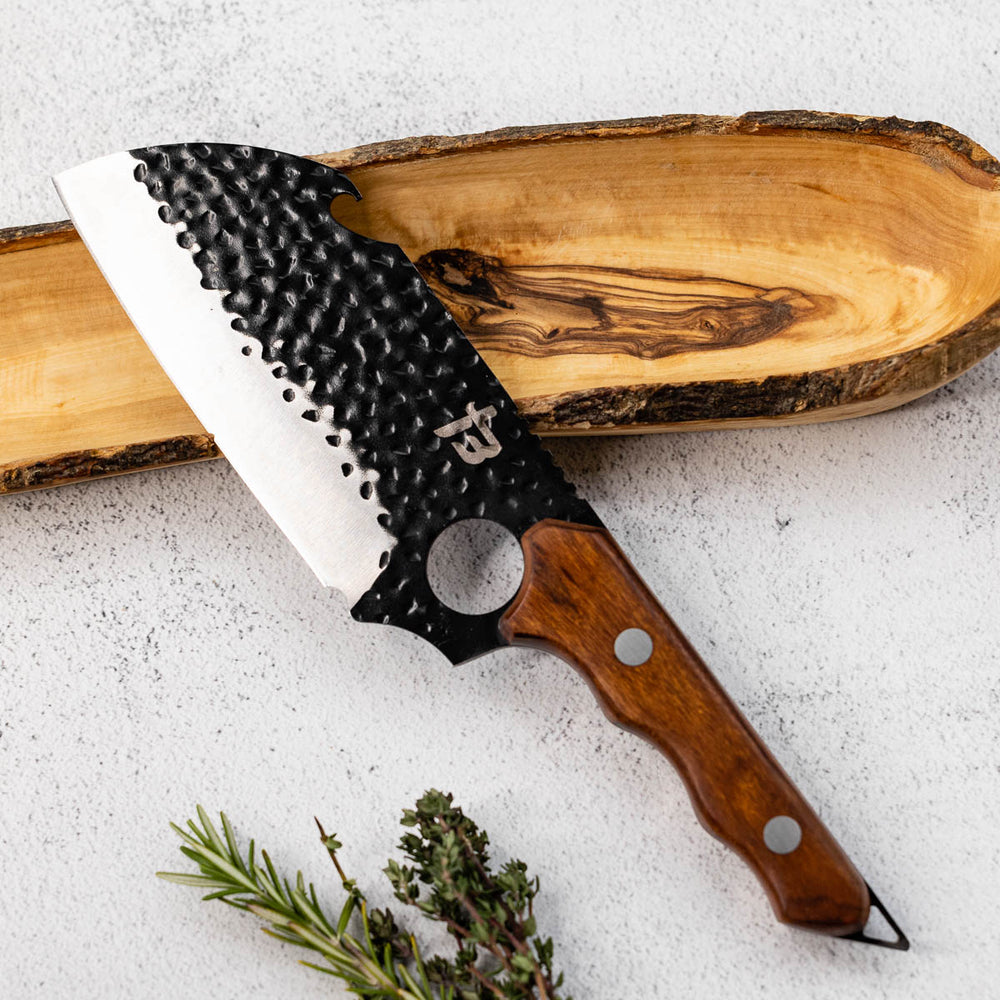
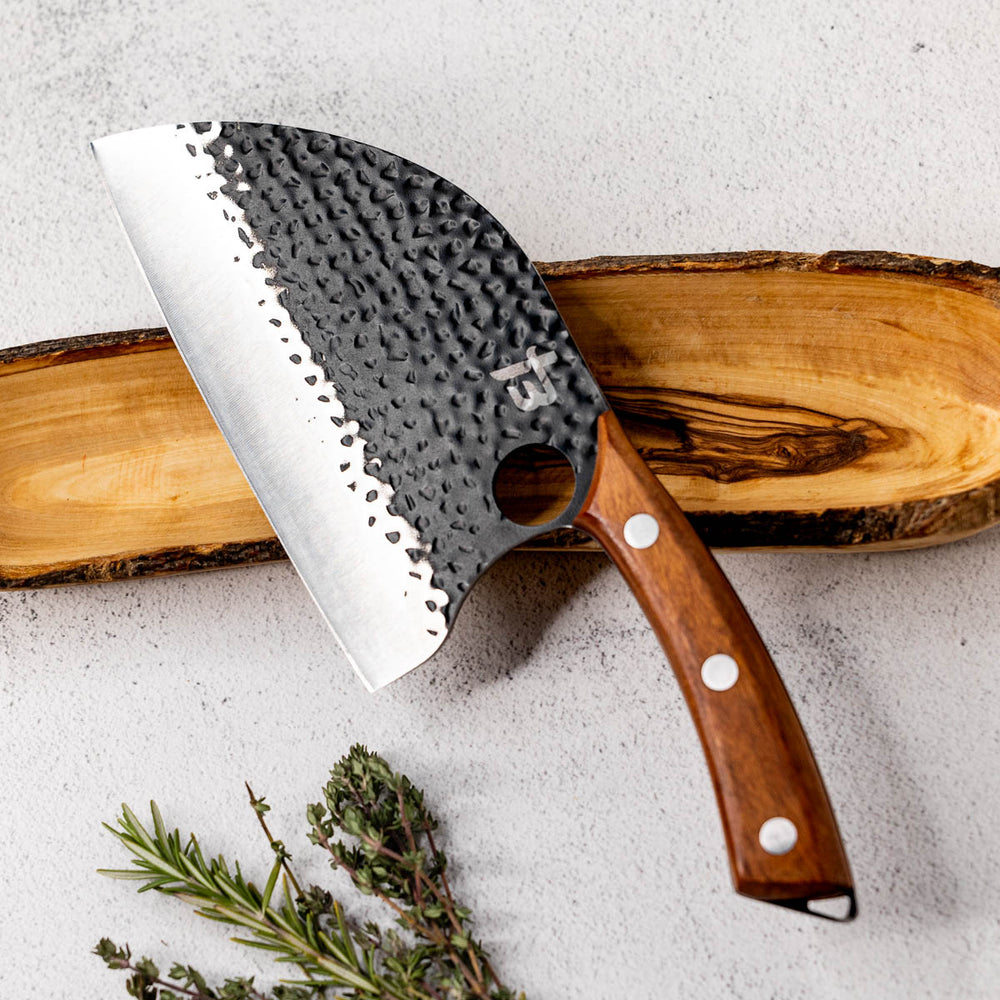
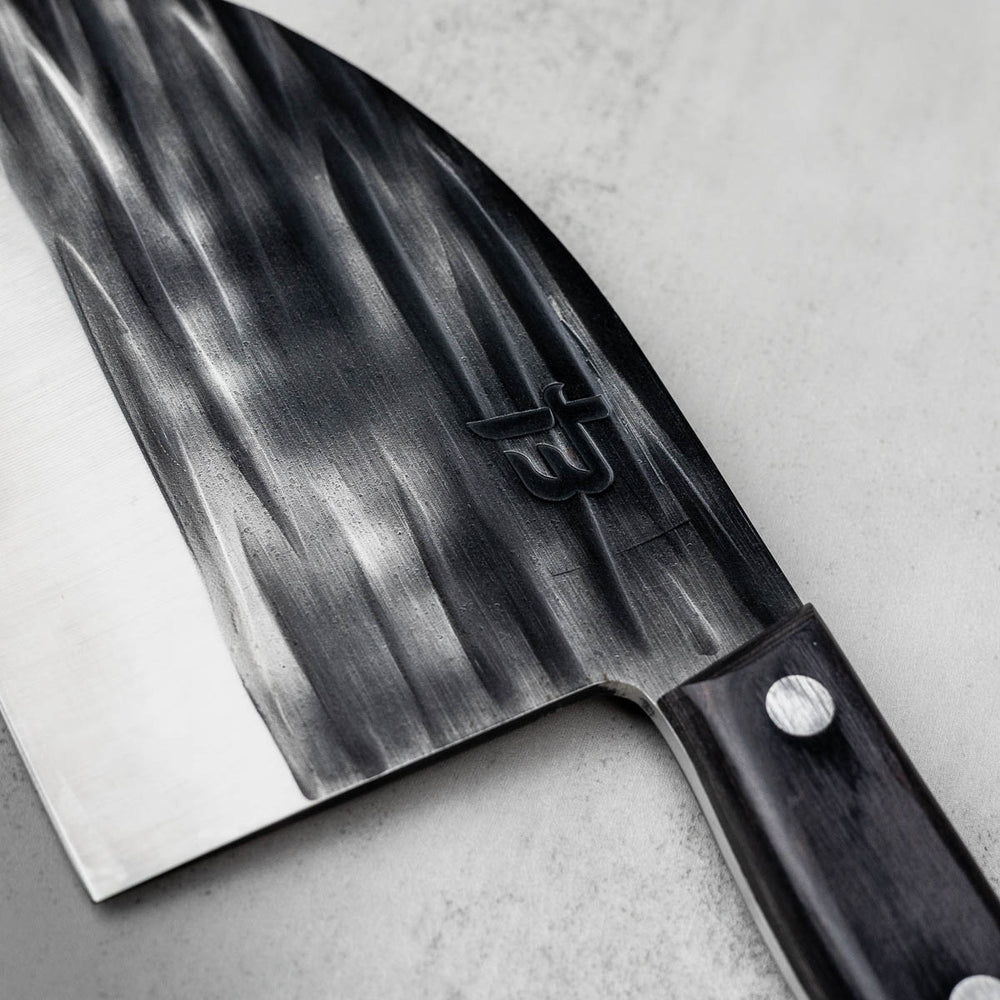
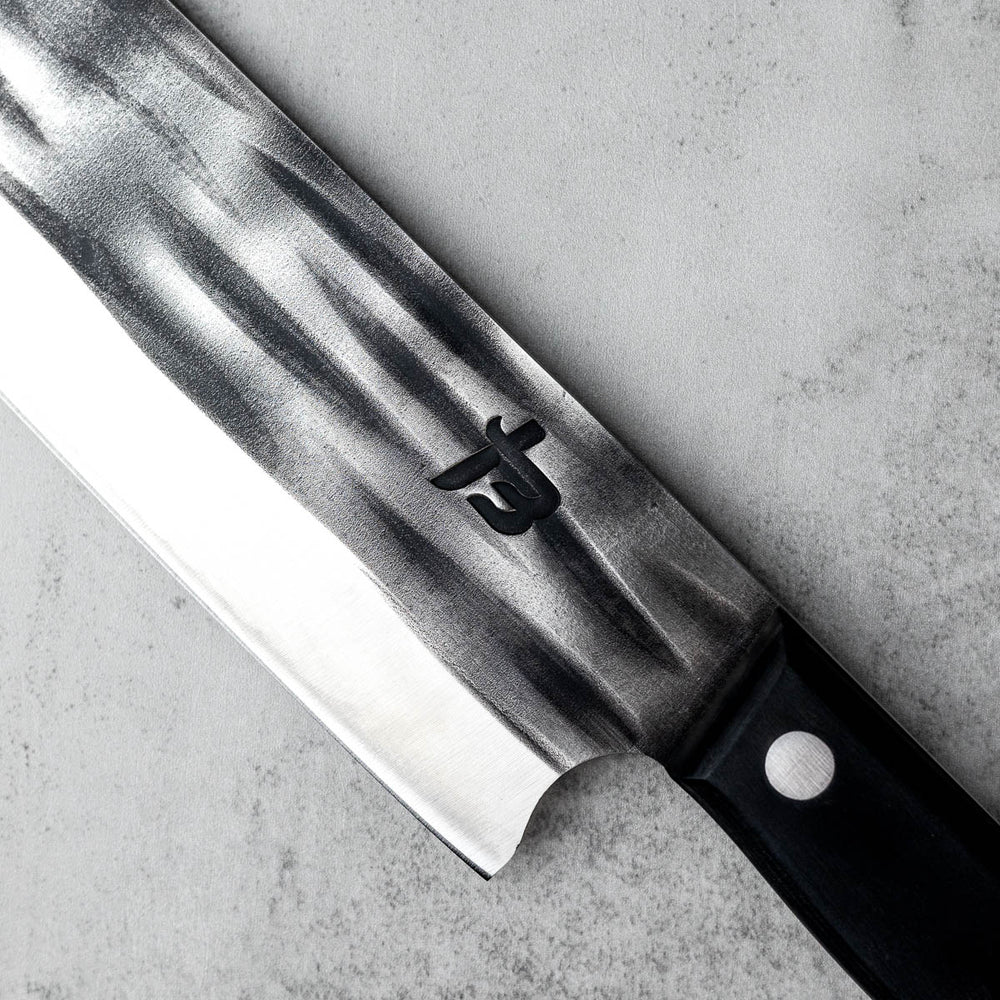
A cleaver is a broad, heavy, rectangular knife built for tasks that lighter blades struggle with. Its weight and substantial blade let it power through dense ingredients with control, while the wide face doubles as a tool for scooping and crushing. Our cleavers are hand-finished and built to bring real power and versatility to your kitchen.
Why a dedicated cleaver matters
Most kitchen knives are designed for slicing and precision work. They are not built to handle dense vegetables, thick cuts of meat, or tough, fibrous ingredients, and forcing a standard chef knife through that kind of work is slow and can damage the blade.
A cleaver solves this through weight and geometry. The heft of the blade does much of the work, letting the knife fall through dense ingredients rather than requiring you to push hard. The broad, flat face is useful well beyond cutting: you can use it to crush garlic, smash ginger, or scoop chopped ingredients straight from the board into a pan. For anyone who breaks down squash, hard root vegetables, or larger cuts of protein, a cleaver turns a frustrating task into an easy one.
How to choose your cleaver
The right cleaver depends on what you plan to use it for and how the weight feels in your hand.
-
Intended use: Vegetable cleavers tend to have a thinner blade suited to chopping and slicing produce, while heavier cleavers are built for denser, tougher work. Match the knife to the jobs you do most.
-
Weight: A heavier cleaver does more of the work for you but can be tiring over long prep sessions. A lighter cleaver offers more agility and control. Choose based on your strength, comfort, and typical workload.
-
Blade size: A larger blade face moves more food and crushes more effectively, while a more compact cleaver is easier to maneuver and store.
A cleaver handles the heavy work, but it is not a precision tool. It pairs naturally with a chef knife for everyday slicing and detail tasks, giving you full coverage across your prep.
What makes ours different
Our cleavers are built around balance. A cleaver lives or dies on how its weight is distributed, and each of ours is shaped so the heft feels purposeful and controlled rather than clumsy. The blade geometry is tuned to fall cleanly through dense ingredients, and the edge is finished to handle demanding work while still cutting cleanly.
You also get a premium knife without the markup. Because we ship direct to consumer rather than through retailers and middlemen, you are paying for the knife itself, not several layers of distribution. Every knife is hand-finished, carries a lifetime warranty, and ships quickly from our US and Canadian warehouses to your door as a local North American brand.
Caring for your cleaver
A well-made cleaver will serve you for decades with straightforward care.
-
Hand wash only. Wash the blade by hand with warm water and mild soap, then dry it immediately. Avoid the dishwasher, where heat, moisture, and detergent can damage both the blade and the handle.
-
Store it safely. Keep the cleaver in a knife block, on a magnetic strip, or in a blade guard rather than loose in a drawer, which dulls the edge and risks chipping.
-
Oil as needed. Wipe the handle and blade with a small amount of food-safe oil occasionally to keep them conditioned, especially in dry environments.
Because of its weight and the demanding tasks it handles, a cleaver benefits from regular honing to keep the edge true, with occasional sharpening as the edge wears.
Frequently Asked Questions
What is a cleaver actually used for? A cleaver excels at heavier kitchen work: breaking down dense vegetables, chopping through thicker cuts of meat, and powering through tough, fibrous ingredients. Its broad face also crushes garlic and ginger and scoops chopped food from the board.
Is a cleaver the same as a chef knife? No. A chef knife is a lighter, precision-oriented all-rounder for slicing and detail work. A cleaver is heavier and broader, designed for power tasks. Most kitchens benefit from having both, since they cover different jobs.
Do I need a lot of strength to use a cleaver? Not necessarily. A cleaver's weight does much of the work, so you let the blade fall rather than forcing it. If you prefer a lighter touch, a lighter cleaver offers more agility while still outperforming a standard knife on dense ingredients.
Can a cleaver go in the dishwasher? No. Dishwasher heat, moisture, and harsh detergent can damage the blade and handle over time. Always hand wash and dry your cleaver to keep it performing and looking its best.
How do I crush garlic with a cleaver? Lay the broad, flat face of the blade over the garlic clove and press down firmly with the heel of your hand. The wide surface area crushes the clove easily, loosening the skin and releasing flavor.