




Sharpening Tools


Knife Sharpening Tools
Knife sharpening tools keep your knives performing the way they did the day you bought them. A sharp knife cuts cleanly, requires less effort, and is safer to use than a dull one. Our sharpening tools are built to help you maintain a keen edge for the life of your knives, and like every knife we sell, they are backed by our lifetime warranty.
Why knife maintenance matters
Every knife, no matter how well made, loses its edge with use. The fine edge of a blade gradually bends out of alignment and slowly wears down, and a dull knife is more than just an inconvenience. It slips more easily, requires more force, and is genuinely more dangerous to use than a sharp one.
Maintaining your knives solves this, and it involves two distinct tasks that are often confused. Honing realigns an edge that has bent slightly out of true. It removes little or no metal and is done frequently to keep a knife performing between sharpenings. Sharpening actually removes a small amount of metal to grind a fresh, keen edge, and is done occasionally when honing alone no longer restores performance. Most knife owners need to do both, at different intervals, to keep their knives at their best.
How to choose your sharpening tools
The right tools depend on understanding the difference between honing and sharpening, since they serve different purposes.
-
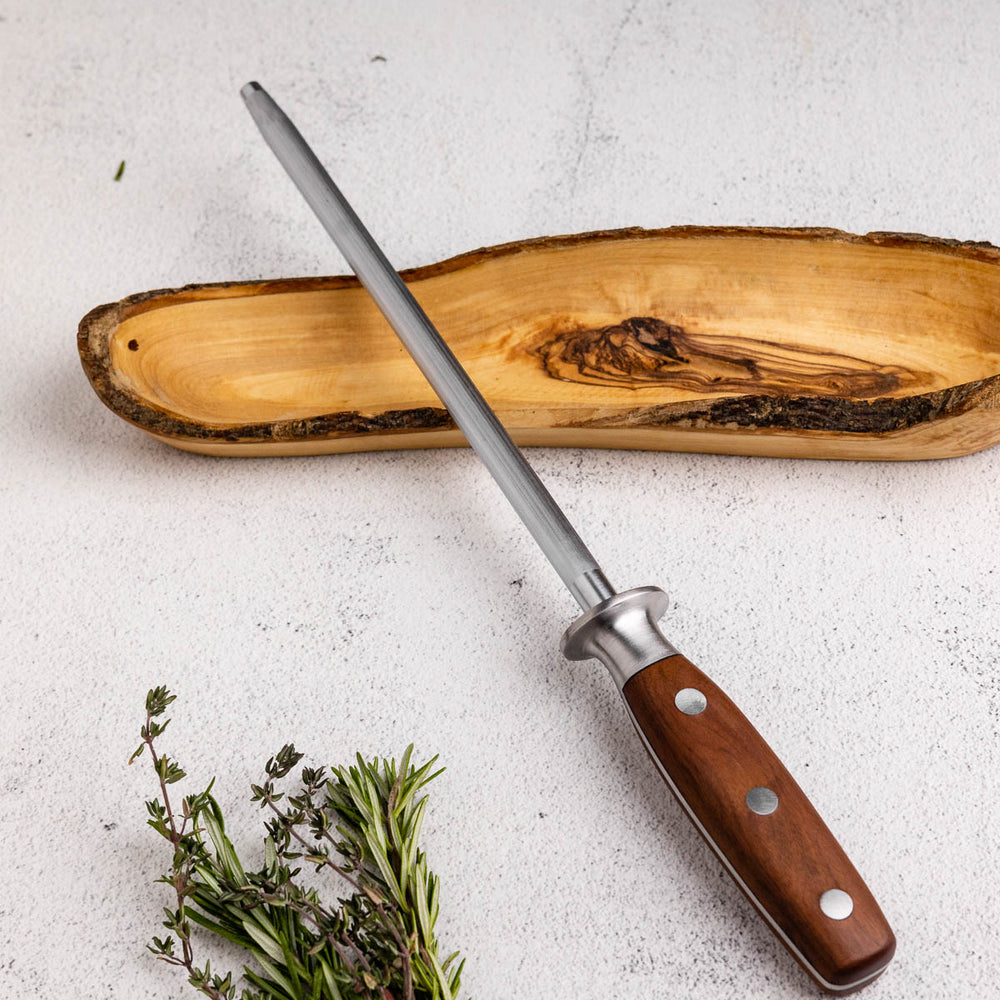
A honing rod is for regular maintenance. Running your knife along a honing rod realigns the edge and keeps it cutting cleanly. This is a quick task many cooks do often, even before each use.
-
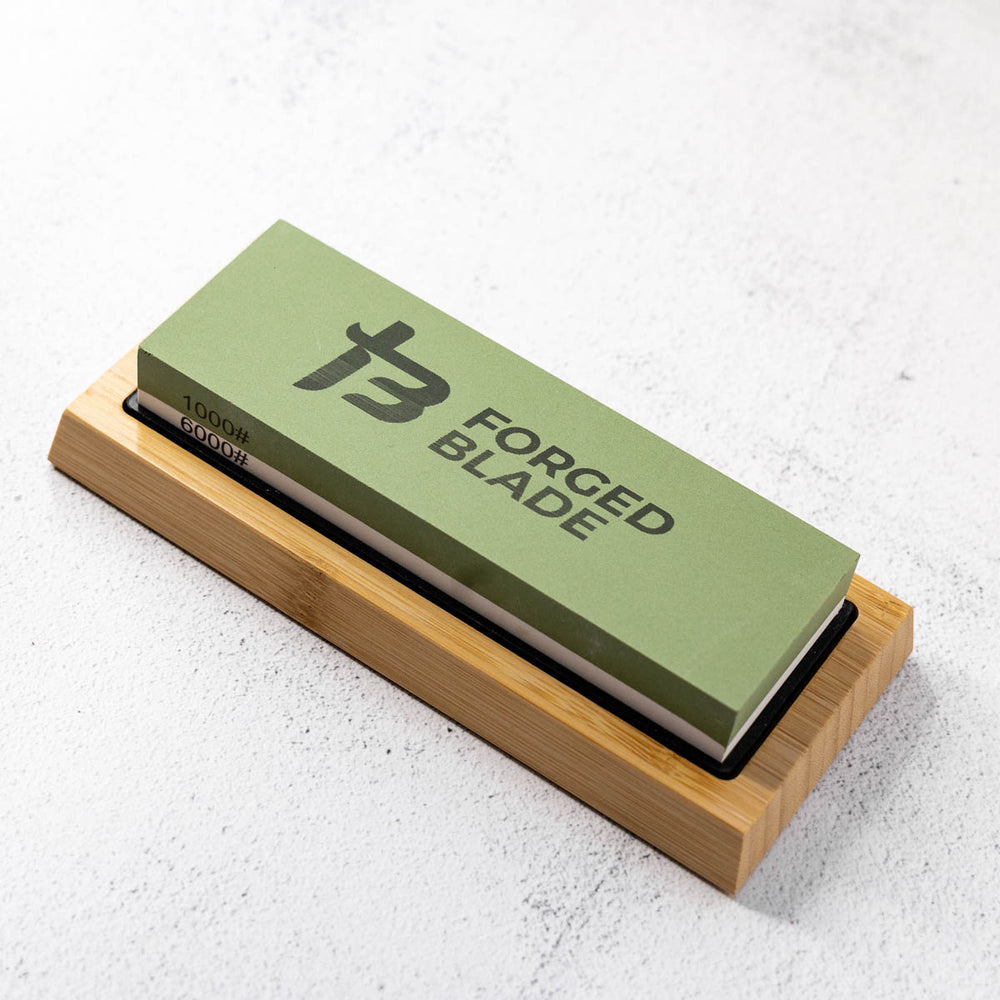
A sharpening stone is for restoring an edge. When honing no longer brings back sharpness, a sharpening stone grinds a fresh edge. A dual-grit stone offers a coarse side to rebuild a worn or damaged edge and a fine side to refine and polish it.
-
Most kitchens need both. A honing rod handles frequent upkeep, while a sharpening stone handles the occasional full restoration. Used together, they keep your knives sharp for years.
Sharpening tools are the natural companion to a quality knife. They pair with every knife we make, from chef knives to specialty blades, and help protect the investment you have made in your kitchen.
What makes ours different
Our sharpening tools are built to do their job well and last. A honing rod needs a true, consistent surface to realign an edge properly, and a sharpening stone needs to hold its form through repeated use. Each of our tools is made to perform reliably over years of regular maintenance.
You also get a premium tool without the markup. Because we ship direct to consumer rather than through retailers and middlemen, you are paying for the tool itself, not several layers of distribution. Every sharpening tool carries the same lifetime warranty as our knives and ships quickly from our US and Canadian warehouses to your door as a local North American brand.
Using and caring for your sharpening tools
Sharpening tools are simple to use and maintain with a few basic practices.
-
Hone regularly. Use your honing rod often to keep edges aligned. A few passes on each side before or after use is enough to maintain a knife between sharpenings.
-
Sharpen as needed. Reach for your sharpening stone when honing no longer restores the edge. Start on the coarse side to rebuild the edge, then finish on the fine side to refine it.
-
Care for your tools. Keep a sharpening stone clean and stored flat, and dry a honing rod after use. Store both safely so their surfaces stay in good condition.
Used consistently, a honing rod and sharpening stone will keep every knife in your kitchen performing at its best.
Frequently Asked Questions
What is the difference between honing and sharpening? Honing realigns an edge that has bent slightly out of true and removes little or no metal, so it is done frequently. Sharpening removes a small amount of metal to grind a fresh edge and is done occasionally. Most knife owners do both.
How often should I hone my knife? Honing is a quick maintenance task, and many cooks hone their knives often, even before each use. Regular honing keeps the edge aligned and extends the time between full sharpenings.
How often should I sharpen my knife? This depends on how much you use the knife, but sharpening is far less frequent than honing. When regular honing no longer restores a clean, sharp edge, it is time to sharpen with a stone.
Do I need both a honing rod and a sharpening stone? For most kitchens, yes. They do different jobs. A honing rod maintains the edge frequently, while a sharpening stone restores it occasionally. Using both keeps your knives sharp and performing well for years.
What does a dual-grit sharpening stone do? A dual-grit stone has two surfaces. The coarse side rebuilds a worn or damaged edge, and the fine side refines and polishes it to a keen finish. This lets a single stone handle both stages of sharpening.
Can I damage my knife by sharpening it incorrectly? Sharpening removes metal, so poor technique can affect the edge. Working at a consistent angle and letting the stone do the work will produce good results. Honing, by contrast, is very low risk and simply realigns the existing edge.