








Paring & Petty Knives
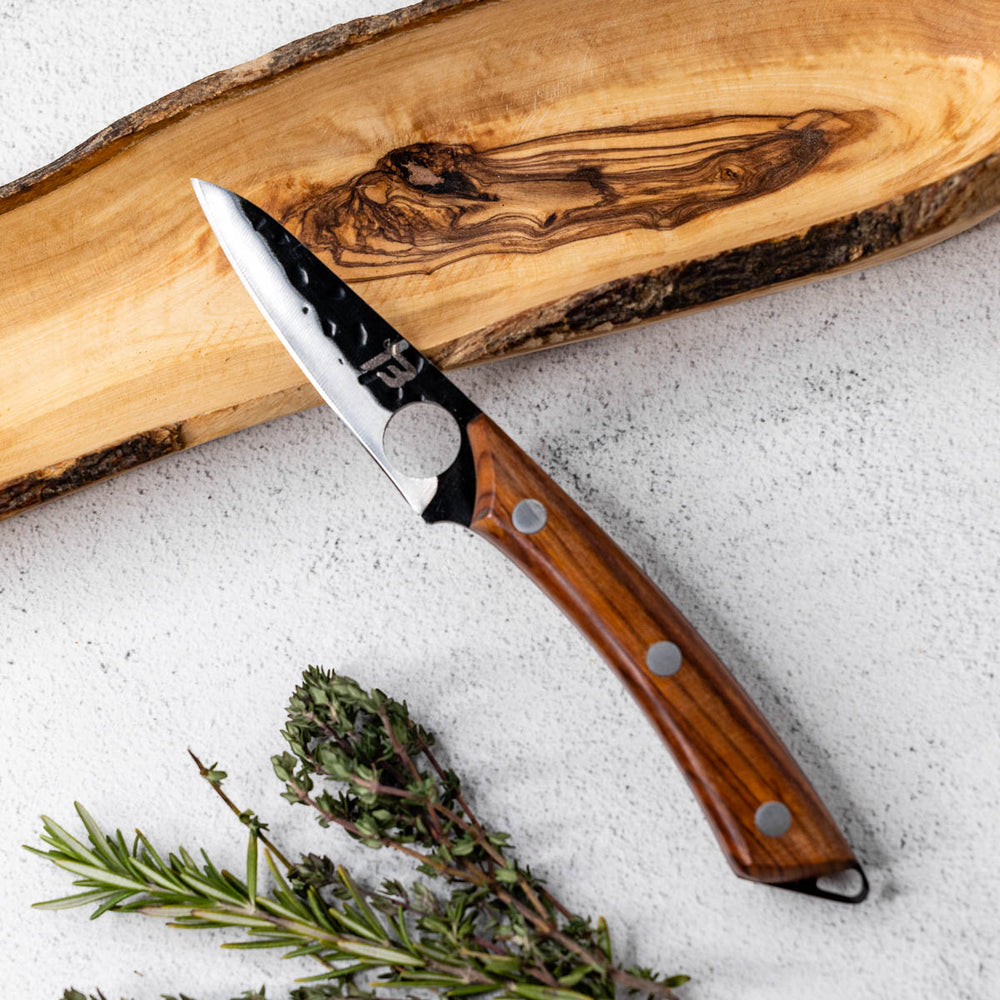
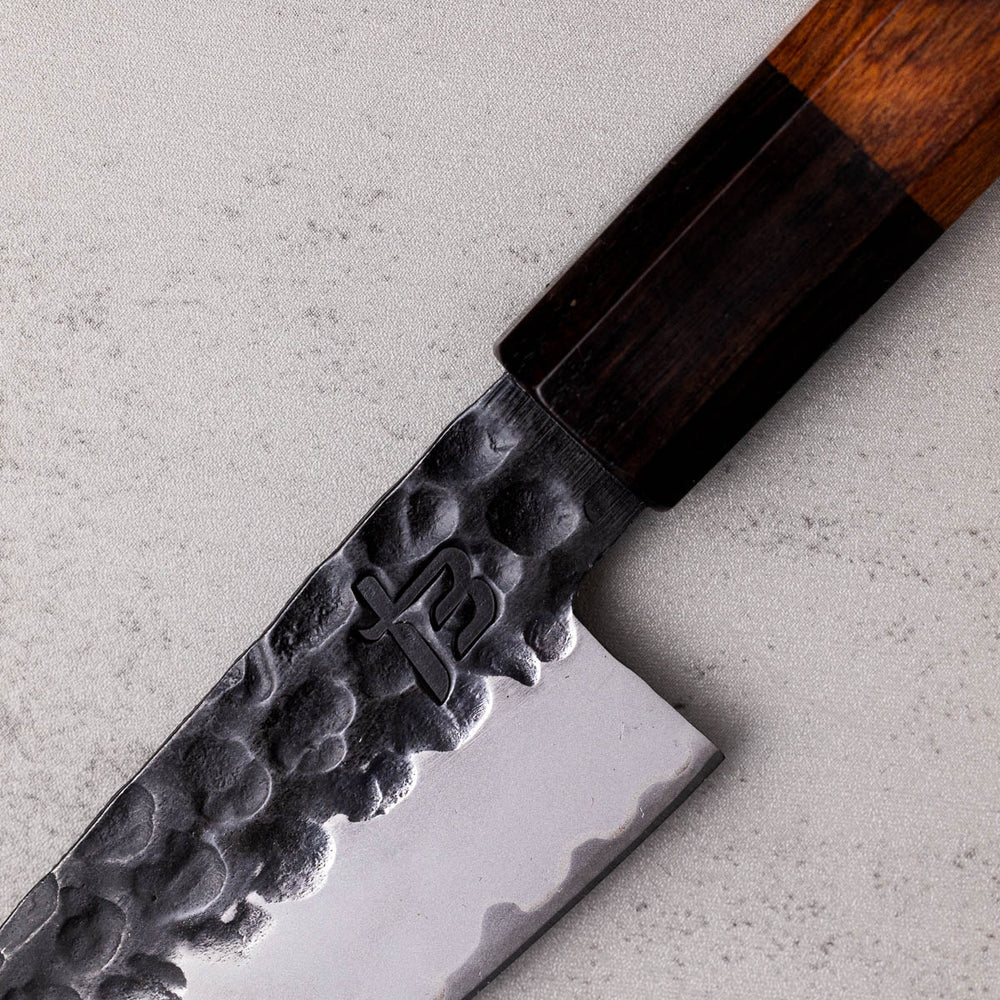
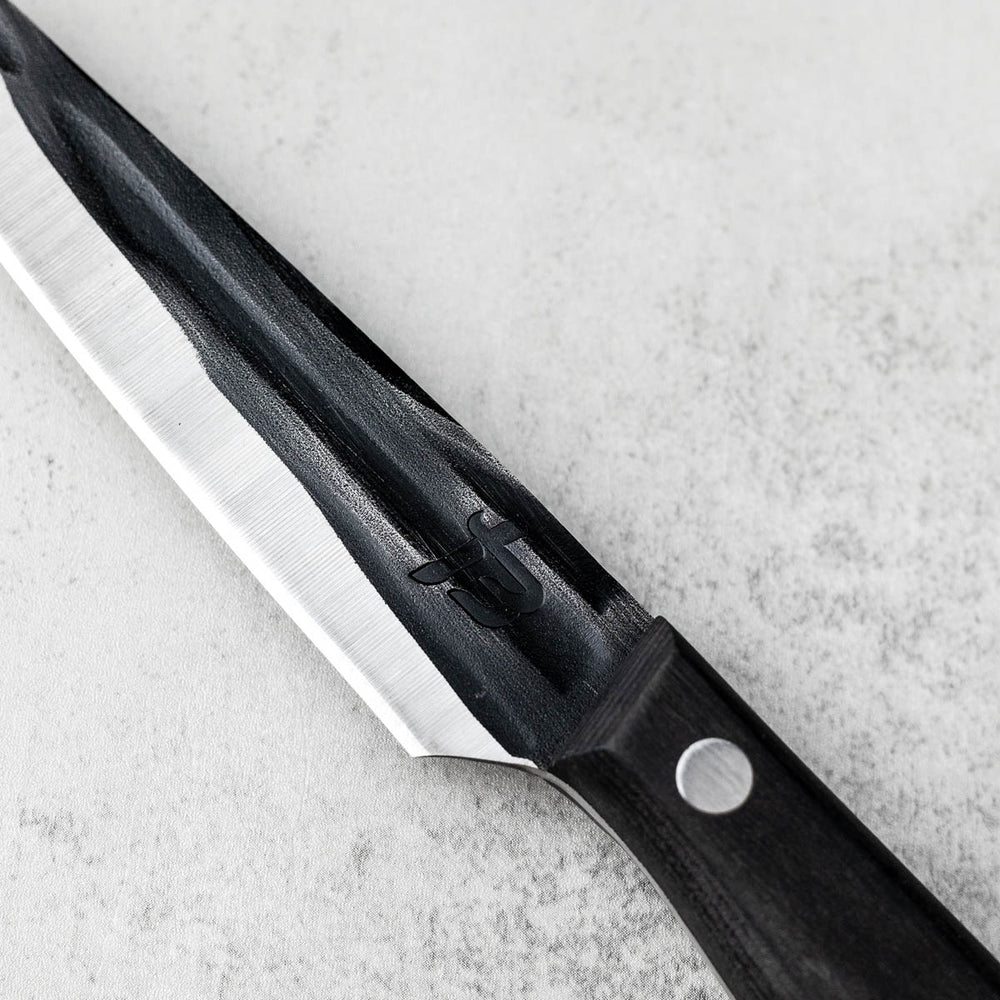
Paring and petty knives are the small, agile blades that handle the detailed work larger knives cannot. A paring knife is a short blade built for precise, often in-hand tasks like peeling and trimming, while a petty knife is slightly longer, acting as a compact all-purpose knife for small jobs on the cutting board. Our paring and petty knives are hand-finished and built to bring precision and control to your everyday prep.
Why a dedicated paring or petty knife matters
A chef knife is versatile, but its size works against it on small, delicate tasks. Peeling an apple, deveining a shrimp, hulling strawberries, or trimming fat from a small cut of meat all call for a blade that is shorter, lighter, and easier to control.
This is the gap paring and petty knives fill. A paring knife gives you the control to work precisely, even when holding the food in your hand rather than on a board. A petty knife extends that control to slightly larger jobs, slicing a shallot, cutting a sandwich, or portioning fruit, without forcing you to reach for a full-size chef knife. Together, they cover the detailed end of kitchen work that a larger blade handles awkwardly.
How to choose between a paring knife and a petty knife
The main decision here is which of the two knives suits your needs, and many cooks find a use for both.
- Choose a paring knife if you want a short blade for precise, detailed tasks. Paring knives are ideal for peeling, trimming, hulling, deveining, and other delicate work, including jobs done in the hand rather than on a board.
- Choose a petty knife if you want a small, nimble all-purpose blade. A petty knife is longer than a paring knife and works well for slicing small produce, herbs, and other quick board tasks where a chef knife feels oversized.
- Consider both if you do a range of detailed prep. They complement each other, with the paring knife handling in-hand precision and the petty knife covering small board work.
These knives are designed to handle small tasks, not heavy ones. They pair naturally with a chef knife, which covers the larger slicing, dicing, and chopping work to give you complete everyday coverage.
What makes ours different
Our paring and petty knives are built around control. On a small blade, precision and comfort matter more than power, so each of ours is shaped to feel nimble and responsive in the hand. The blade geometry and edge are finished for clean, accurate cutting on delicate tasks where a larger knife would feel clumsy.
You also get a premium knife without the markup. Because we ship direct to consumer rather than through retailers and middlemen, you are paying for the knife itself, not several layers of distribution. Every knife is hand-finished, carries a lifetime warranty, and ships quickly from our US and Canadian warehouses to your door as a local North American brand.
Caring for your paring or petty knife
A quality small knife will last for many years with simple care.
- Hand wash only. Wash the blade by hand with warm water and mild soap, then dry it immediately. Avoid the dishwasher, where heat, moisture, and detergent can damage both the blade and the handle.
- Store it safely. Keep the knife in a knife block, on a magnetic strip, or in a blade guard rather than loose in a drawer, which dulls the edge and risks chipping.
- Oil as needed. Wipe the handle and blade with a small amount of food-safe oil occasionally to keep them conditioned, especially in dry environments.
Because these knives are used often for detailed work, regular honing keeps the edge precise, with occasional sharpening as the edge naturally wears.
Frequently Asked Questions
What is the difference between a paring knife and a petty knife? A paring knife is shorter and built for precise, detailed tasks, often done in the hand, such as peeling and trimming. A petty knife is slightly longer and works as a small all-purpose blade for quick tasks on the cutting board. Many cooks keep both.
What is a paring knife used for? A paring knife is ideal for delicate, precise work: peeling fruit and vegetables, hulling strawberries, deveining shrimp, trimming fat, and other small tasks where a larger blade is hard to control.
What is a petty knife used for? A petty knife handles small jobs that fall between a paring knife and a chef knife, such as slicing small produce, cutting herbs, portioning fruit, or quick board work where a full chef knife feels oversized.
Do I need both a paring knife and a petty knife? Not necessarily, but they complement each other well. If you do a lot of detailed prep, a paring knife handles in-hand precision while a petty knife covers small board tasks. If you want just one, choose based on whether you mostly need in-hand control or a small all-purpose blade.
Can a paring or petty knife go in the dishwasher? No. Dishwasher heat, moisture, and harsh detergent can damage the blade and handle over time. Always hand wash and dry these knives to keep them performing and looking their best.