





Santoku Knives
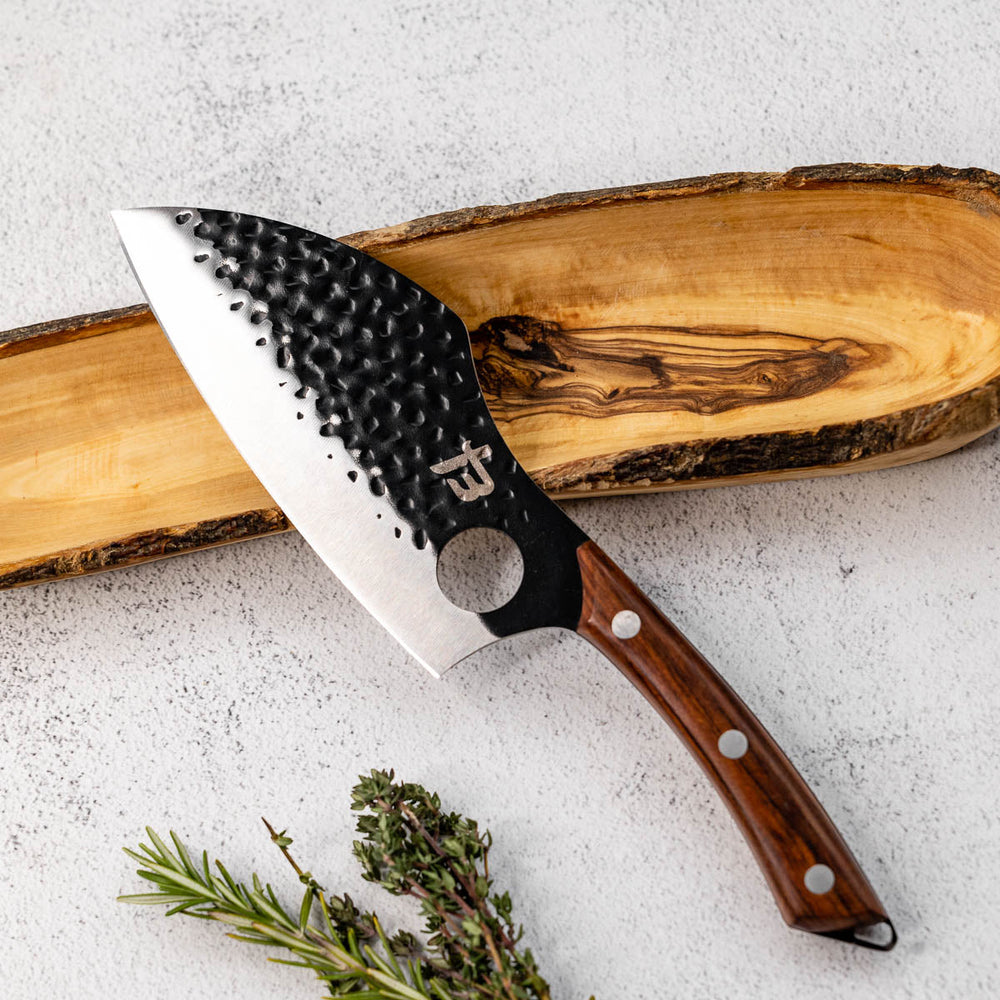
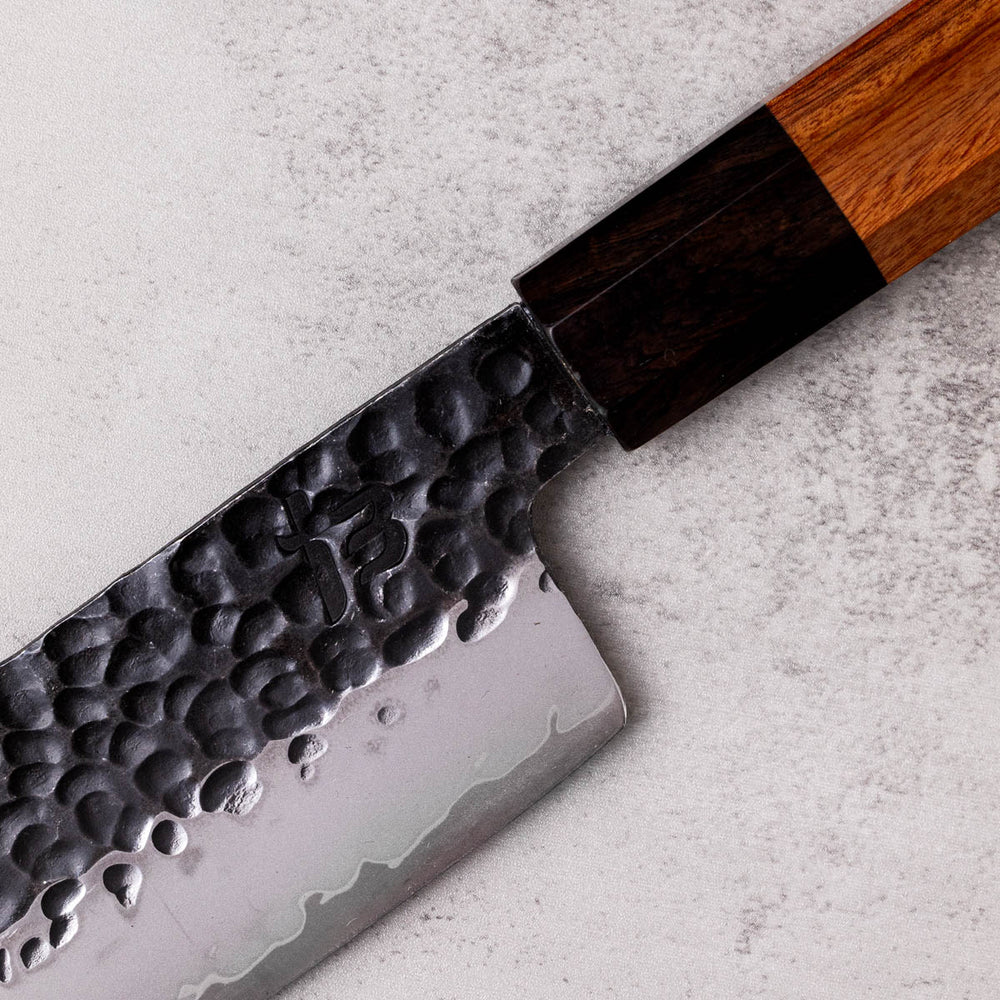
A santoku is a versatile all-purpose Japanese-style knife and one of the most capable blades a kitchen can have. Its name reflects its strength across three core tasks — slicing, dicing, and mincing — and its flatter profile and balanced design make it an efficient everyday workhorse. Our santoku knives are hand-finished and built to handle the bulk of daily kitchen prep with precision and control.
Why a dedicated santoku matters
Many home cooks default to whatever knife is closest at hand, which makes everyday prep slower and less precise than it should be. A santoku is built to be the knife you reach for first, and it brings a distinct cutting style that many cooks prefer.
Where a chef knife has a curved blade suited to a rocking motion, a santoku has a flatter profile designed for a clean up-and-down chopping or push-cutting motion. This makes it especially efficient for slicing vegetables, dicing onions, and mincing herbs, with the blade meeting the board fully on each cut. The result is fast, controlled prep across the majority of everyday tasks, which is exactly what an all-purpose knife should deliver.
How to choose your santoku
The right santoku comes down to blade length, balance, and how it compares to a chef knife for your cutting style.
- Blade length: Santoku knives are typically a little shorter than chef knives. A shorter blade offers nimble control, while a longer one covers more food per stroke. Choose what feels confident in your hand.
- Balance and weight: A lighter santoku offers quick, precise handling, while a slightly heavier one carries more momentum through dense ingredients. Neither is better; it depends on your comfort and cutting style.
- Santoku or chef knife: If you prefer a flat-bladed push-cutting or chopping motion, a santoku will suit you well. If you favor a rocking motion, a chef knife may feel more natural. Many cooks keep both and reach for whichever fits the task.
A santoku handles most everyday tasks, but not the smallest detailed work. It pairs naturally with a paring knife for precise, in-hand jobs that a larger blade cannot manage comfortably.
What makes ours different
Our santoku knives are built around balance and edge. Because a santoku is used heavily in daily prep, how it feels through each cut matters, so each of ours is shaped to move cleanly and comfortably through a full range of ingredients. The blade geometry and edge are tuned for the precise, controlled chopping motion a santoku is designed around.
You also get a premium knife without the markup. Because we ship direct to consumer rather than through retailers and middlemen, you are paying for the knife itself, not several layers of distribution. Every knife is hand-finished, carries a lifetime warranty, and ships quickly from our US and Canadian warehouses to your door as a local North American brand.
Caring for your santoku
A quality santoku will last a lifetime with simple, consistent care.
- Hand wash only. Wash the blade by hand with warm water and mild soap, then dry it immediately. Avoid the dishwasher, where heat, moisture, and detergent can damage both the blade and the handle.
- Store it safely. Keep the knife in a knife block, on a magnetic strip, or in a blade guard rather than loose in a drawer, which dulls the edge and risks chipping.
- Oil as needed. Wipe the handle and blade with a small amount of food-safe oil occasionally to keep them conditioned, especially in dry environments.
Because a santoku is used so frequently, regular honing keeps the edge aligned and performing at its best, with occasional sharpening as the edge naturally wears.
Frequently Asked Questions
What is a santoku knife used for? A santoku is an all-purpose knife suited to slicing, dicing, and mincing. It handles the majority of everyday kitchen tasks, including preparing vegetables, fruit, herbs, and most proteins.
What is the difference between a santoku and a chef knife? Both are versatile all-purpose knives. A chef knife has a more curved blade suited to a rocking motion, while a santoku has a flatter profile suited to an up-and-down chopping or push-cutting motion. The best choice depends on how you like to cut.
Is a santoku better than a chef knife? Neither is better; they simply suit different cutting styles. A santoku favors a flat chopping motion, while a chef knife favors rocking. Many cooks own both and choose based on the task and personal preference.
What size santoku should I get? Santoku knives are usually a little shorter than chef knives. Choose a length that feels comfortable and controlled in your hand and matches the kind of prep you do most often.
Can a santoku go in the dishwasher? No. Dishwasher heat, moisture, and harsh detergent can damage the blade and handle over time. Always hand wash and dry your santoku to keep it performing and looking its best.